|
 A
CURE FOR SEPARATION ANXIETY? - Will this new drug help your pet A
CURE FOR SEPARATION ANXIETY? - Will this new drug help your pet
PRESIDENTIAL RACE OR DOGFIGHT? - What kind of dog
is your candidate
STRESS RELIEF COMBAT DOGS - K9
therapists of war
WHY I MARRIED MY CAT- Is a "Catmitment
Ceremony" right for you
WHERE THE CANDIDATES STAND
ON ANIMALS
- Who tied their dog to
the top of the car
PET PRODUCT INVENTIONS - A doorbell for your
pet
VETERINARY CSI UNIT - Gathering forensics to convict Vick
PET SMILES GO HI-TECH - Are Boxers with
braces around the corner
DOG ARRANGES TOYS IN GEOMETRIC
SHAPES
- OCD or Genius Dog
Also in this issue:
  Glenn
Close is remembered
for her chilling roles as a torturer of animals. Of course, she's
loves animals in "real life." She compares her dogs
to the Dali-lama and Barney Fife. Glenn
Close is remembered
for her chilling roles as a torturer of animals. Of course, she's
loves animals in "real life." She compares her dogs
to the Dali-lama and Barney Fife.
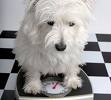
National Canine Weight Check. Are our pets really that
fat? Statistics show that there are 54 million overweight pets
in the United States alone. |
|
Presidential
Race or Dogfight?
Vladae, The Russian
Dog Wizard
If your candidate were a dog, what type of dog would they be?
Vladae, who knows dogs better than anyone, gives us that answer.
Republicans:
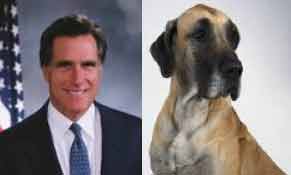 Mitt
Romney Mitt would be a Great Dane, which is tall, calm,
stable, full of dignity and handsome. However the Great Dane
also can be very aggressive with other males and chases small
animals (in other words lower ranking human people). He would
be an authoritarian leader, so to balance him; he would need
another (Democrat) dog like a Labrador Retriever or a Golden
Retriever. Mitt
Romney Mitt would be a Great Dane, which is tall, calm,
stable, full of dignity and handsome. However the Great Dane
also can be very aggressive with other males and chases small
animals (in other words lower ranking human people). He would
be an authoritarian leader, so to balance him; he would need
another (Democrat) dog like a Labrador Retriever or a Golden
Retriever.
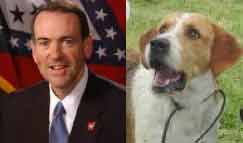 Mike
Huckabee Mike
would be a Foxhound because a Foxhound likes everyone, they think
everyone is a good guy and they want to be buddies with everyone.
But, as with all hounds, they only focus on one task at a time.
To become a good president, he would need some muscle, like that
of a German Shepherd to act as vice president. Mike
Huckabee Mike
would be a Foxhound because a Foxhound likes everyone, they think
everyone is a good guy and they want to be buddies with everyone.
But, as with all hounds, they only focus on one task at a time.
To become a good president, he would need some muscle, like that
of a German Shepherd to act as vice president.
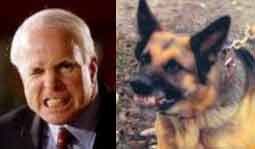 John
McCain John would be a German Shepherd which is loyal
and smart. On the down side, the German Shepherd also can be
nasty if not properly socialized and very aggressive. He needs
to also have some type of a more diplomatic dog like a Poodle
to go along with him. John
McCain John would be a German Shepherd which is loyal
and smart. On the down side, the German Shepherd also can be
nasty if not properly socialized and very aggressive. He needs
to also have some type of a more diplomatic dog like a Poodle
to go along with him.
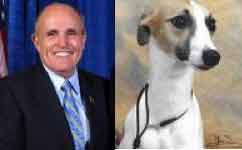 Rudy
Giuliani Before
the race, Rudy was a Neapolitan Mastiff but now he is an Italian
Greyhound, which is manipulative but faithful, but also lacks
loyalty. They also have an attitude of a big dog. If they see
something attractive, they will break away and chase it with
the speed of a Russian Satellite Guided Missile. Rudy
Giuliani Before
the race, Rudy was a Neapolitan Mastiff but now he is an Italian
Greyhound, which is manipulative but faithful, but also lacks
loyalty. They also have an attitude of a big dog. If they see
something attractive, they will break away and chase it with
the speed of a Russian Satellite Guided Missile.
Democrats:
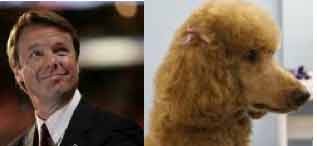 John
Edwards John
would be a Standard Poodle, which is smart and playful. On the
down side, the Standard Poodle is too noisy and too hyper and
needs some muscle from a dog like a Boxer, a Pit Bull or a Great
Dane for balance. John
Edwards John
would be a Standard Poodle, which is smart and playful. On the
down side, the Standard Poodle is too noisy and too hyper and
needs some muscle from a dog like a Boxer, a Pit Bull or a Great
Dane for balance.
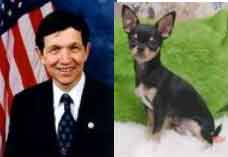 Dennis
Kucinich Dennis would be a Chihuahua, which is loyal
and has an attitude of a big dog. But, since he has no strength,
he would need to get it from another dog, like an Irish Wolfhound. Dennis
Kucinich Dennis would be a Chihuahua, which is loyal
and has an attitude of a big dog. But, since he has no strength,
he would need to get it from another dog, like an Irish Wolfhound.
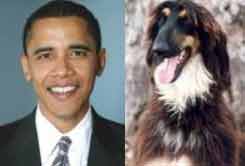 Barack
Obama Barack
would be an Afghan Hound Puppy, because like a puppy, he is full
of hope and believes that every puppy should have a meaty bone
and not just scraps. The Afghan Hound is also a rare breed, so
he needs another dog, which is more familiar and acceptable,
to win. Barack
Obama Barack
would be an Afghan Hound Puppy, because like a puppy, he is full
of hope and believes that every puppy should have a meaty bone
and not just scraps. The Afghan Hound is also a rare breed, so
he needs another dog, which is more familiar and acceptable,
to win.
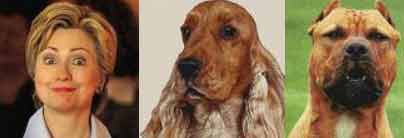 Hillary
Clinton Hillary would be a mutt, perhaps a cross between
a Cocker Spaniel and a Pit Bull, sort of like a wolf in sheep's
clothing. Cocker Spaniels are cocky and snappy. Pit Bulls are
attack dogs. She doesn't care what her gender is nor if she is
in the minority. She is not submissive and is very dominant,
and will show every other dog where their fence line is, because
she knows if she doesn't, they will show it to her. Hillary
Clinton Hillary would be a mutt, perhaps a cross between
a Cocker Spaniel and a Pit Bull, sort of like a wolf in sheep's
clothing. Cocker Spaniels are cocky and snappy. Pit Bulls are
attack dogs. She doesn't care what her gender is nor if she is
in the minority. She is not submissive and is very dominant,
and will show every other dog where their fence line is, because
she knows if she doesn't, they will show it to her.
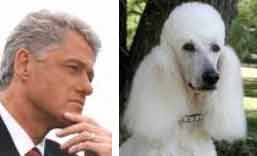 And,
just for fun: And,
just for fun:
Bill Clinton Bill would be a Poodle, smart
but also manipulative like a Pit Bull, but together with Hillary,
they are a great combination. Hillary was always a Pit Bull and
Bill was always a poodle.
Vladae believes that when it
comes down to the end, it will be the Great Dane (Mitt Romney)
and the Pit Bull (Hillary Clinton). He also believes the final
"dog fight" winner will be the Pit Bull (Hillary) because
no one can win in a fight against a Pit Bull!
http://www.controlyourpet.com
 Hear Vladae on Animal Radio® Hear Vladae on Animal Radio®
This weekend on Animal Radio®
Actress Glenn Close
Glenn Close has had a lengthy
career as a versatile actress and performer. Glenn is remembered
for her chilling roles as the scheming aristocrat Madame de Merteuil
in Dangerous Liaisons; terrorizing puppies as Cruella di Vil
in 101 Dalmatians; and as the psychotic book editor Alex Forrest
in Fatal Attraction. In her new series, Damages, Glenn brings
force and power as Patty Hewes, a fierce litigator who has a
dog killed. But, Glenn is nothing like the characters she plays,
and in fact is a big animal lover! Glenn doesn't believe there
was a time in her life growing up when she didn't have animals
Glenn currently has two dogs,
Bill and Jake, whom she takes to work with her everyday. In fact,
they have become the mascots of the Steiner Studios.
Look for Glenn's "Lively
Licks" blog, which is a profile of dogs and their people,
with the launch of the website Fetchdog.com, where she will ask questions
such as: When did you become a dog lover? Why Dogs? And, if your
dog were a famous person, who would they be? Some of the first
subjects are Ted Danson, his wife Mary Steenburg. Glenn states
that if her dogs were famous people, Jake would be the Dali-lama
and Bill would be Barney Fife!
Hear Glenn Close on Animal Radio®
National Canine Weight Check
Dr. Bernadine Cruz,
Laguna Hills Animal Hospital
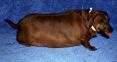 In February 2008, veterinarians
across the United States will be participating in the first-ever
National Canine Weight Check. This is a health initiative to
educate dog owners on how to identify a healthy weight for their
dogs so that owners can begin to take important steps to avoid
the serious health risks associated with canine obesity. While
many dog owners realize canine obesity is a serious condition,
some owners may not be aware that their dogs are overweight or
obese, or they may not understand that obesity can have serious
health implications including heart disease, arthritis, skin
conditions and breathing problems. Obesity can also worsen the
signs associated with pre-existing diseases. In February 2008, veterinarians
across the United States will be participating in the first-ever
National Canine Weight Check. This is a health initiative to
educate dog owners on how to identify a healthy weight for their
dogs so that owners can begin to take important steps to avoid
the serious health risks associated with canine obesity. While
many dog owners realize canine obesity is a serious condition,
some owners may not be aware that their dogs are overweight or
obese, or they may not understand that obesity can have serious
health implications including heart disease, arthritis, skin
conditions and breathing problems. Obesity can also worsen the
signs associated with pre-existing diseases.
Dog owners are invited to bring their pets to a participating
veterinary practice in their area during the month of February
for a free weight assessment, including breed-specific information.
Owners will also receive information on the serious health implications
of canine obesity, along with a mail-in postcard for a free gift.
For information on participating veterinarians in your area,
please visit www.stopcanineobesity.com.
Hear Dr. Bernadine Cruz on Animal Radio®
Pet Census
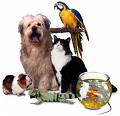 Are
dogs really man's best friend? Are
dogs really man's best friend?
Not so according to a recent
pet census. Cats top the list - put together by the American
Veterinary Medical Association.
60 percent of American households
have a pet. That's 282 million non-human family members nationwide.
82 million of them are cats
- up a hefty 10 million in the last 5 years.
There are 72 million are dogs,
11 million birds, 2 million turtles and 1 million hamsters.
Surprisingly, 1 in 5 homes
have 5 or more pets. The state with the most cats is...drum roll
please, Maine. Wyoming has the most dogs.
Hear Pet Census on Animal Radio®
| Hear
breaking news as it happens - Animal Radio®
is streaming online 24/7 Listen LIVE Now! |
|
Ed Begley, Jr.
Going "Green"
with Your Pets
 Ed Begley first became aware of
conservation growing up in smoggy Los Angeles. By the 1970 (and
the First Earth Day) Ed decided that enough was enough and he
decided to do something about it. Ed Begley first became aware of
conservation growing up in smoggy Los Angeles. By the 1970 (and
the First Earth Day) Ed decided that enough was enough and he
decided to do something about it.
He is one of those people who
doesn't just talk the talk, he walks the walk. Literally.
One of the first actions Ed took himself was to become a vegetarian.
"It just seemed like a good thing to do in 1970. But it
was so hard back then that I was only a vegetarian for about
a year. Then I started eating some fish because I couldn't find
vegetarian food when I traveled. I'd do a movie in some distant
city or even on location and they wouldn't have anything to eat,"
Ed explains. "I became a vegan again in 1992." And
can you believe he actually has (and uses!) a Los Angeles bus
pass! He also drives an electric car, lives in a solar powered
home and recycles everything he can.
 Ed
currently has a 17-year-old dog and a 12-year-old cat. This,
of course, doesn't include the feral cats that he regularly feeds.
Ed traps and alters the feral cats that he can. But, trapping
a feral cat can be a tough thing to do. Find out how Ed was able
to trap one feline who eluded him for years! Ed
currently has a 17-year-old dog and a 12-year-old cat. This,
of course, doesn't include the feral cats that he regularly feeds.
Ed traps and alters the feral cats that he can. But, trapping
a feral cat can be a tough thing to do. Find out how Ed was able
to trap one feline who eluded him for years!
Ed offers some great suggestions
on how pet guardians can become environmentally friendly:
Buy organic pet food
Clean your pet's food bowls frequently (this reduces pests
and therefore the need for pesticides)
Groom your pet regularly using organic shampoos that are non-toxic
for your pet and the environment
Change your air and heat filters regularly (pet hair can clog
your filters and make these units work harder)
Besides his environmental lifestyle,
Ed has also created some environmental friendly cleaning products,
"Begley's Best," for you to use in your own home. He
has created everything from an all-purpose cleaner to a carpet
spot remover. To find out where you can find these products,
visit www.begleysbest.com.
You can also catch Ed on HGTV "Living with Ed," for more points on
being "green."
Hear Ed Begley, Jr. on Animal Radio®
Where
Do Our Presidential Candidates Stand on Animal Issues?
Michael Markarian,
President of the Humane Society Legislative Fund
Michael Markarian is the president of the Humane Society Legislative
Fund, a 501(c)(4) social welfare organization that lobbies for
animal welfare legislation and works to elect humane-minded candidates
to public office. In almost 15 years in the animal protection
movement, Markarian has worked for the passage of countless state
laws and federal statutes to protect animals, in addition to
helping defeat some of the strongest anti-animal welfare politicians
in the United States.
Michael returns once again
to Animal Radio® to discuss where our front-running candidates
stand on animal welfare issues.
Evaluating the Elephants:
 I
want to provide an overview of the Republican presidential candidates.
Mike Huckabee has a terrible approach to animal cruelty issues
and panders to the sport-hunting lobby and Ron Paul's has a philosophical
opposition to even the most modest animal welfare policies in
Congress. Here's what we know about the other presidential hopefuls
in the party of the elephants: I
want to provide an overview of the Republican presidential candidates.
Mike Huckabee has a terrible approach to animal cruelty issues
and panders to the sport-hunting lobby and Ron Paul's has a philosophical
opposition to even the most modest animal welfare policies in
Congress. Here's what we know about the other presidential hopefuls
in the party of the elephants:
Rudy Giuliani: As mayor, Giuliani did not have as
many opportunities to take a position on animal issues as those
who served as governor or a member of Congress, but he did take
some proactive measures in America's largest city. In 2000, he
proposed and signed a bill to promote the spaying and neutering
of dogs and cats and open an animal shelter in each borough in
order to help curb New York's pet overpopulation. He is the first
Republican candidate to release a public statement on animal
issues, which is reproduced here in its entirety: "Animals
play an important part in the lives of many Americans. We should
all work to reduce animal suffering by advocating for sensible
public policies, investigating animal cruelty and strongly enforcing
the laws that are already on the books. I will continue to support
efforts to educate the public about animal issues, and work with
corporations to develop animal-friendly policies."
John McCain: In the U.S. Senate, McCain has been
a strong supporter of numerous animal welfare issues, earning
scores of up to 75 percent on the Humane Scorecard. He has voted
for and co-sponsored legislation to stop horse slaughter, and
voted to eliminate a $2 million subsidy for the mink industry.
He has co-sponsored bills to stop the interstate shipment of
birds for cockfighting and to stop the poaching of bears by ending
the trade in their gall bladders and other viscera. He took an
anti-animal position by supporting an amendment to the California
Desert Protection Act, which would have allowed sport hunting
in the Mojave National Park. Senator McCain has been a leader
in the effort to stop global warming, and he opposes drilling
for oil in the Arctic National Wildlife Refuge, which is home
to many wildlife species.
Mitt Romney: Romney attracted the ire of animal
advocates when they learned that during a 1983 vacation, he put
the family's Irish setter, Seamus, in a carrier and strapped
him to the roof rack of the station wagon. When the terrified
dog urinated and defecated during the twelve-hour drive, Romney
pulled over, hosed down the dog, and continued the voyage from
Boston to Ontario. As chief executive of the 2002 Winter Olympics
in Salt Lake City, Romney also came under fire from animal protection
groups for allowing a rodeo exhibition that included calf roping.
His term as governor didn't exactly inspire confidence in his
judgment on animal issues, either. He appointed a raft of animal-unfriendly
people to the state Fisheries and Wildlife Board. He did, however,
leave the governor's mansion on a high note by signing a bill
passed in 2006 to strengthen the Massachusetts animal fighting
law and prevent a convicted animal abuser from getting the animal
back.
Mike Huckabee: Huckabee has been in the news recently
for his son's alleged history of animal cruelty. Huckabee was
the state's chief executive for more than a decade, and was largely
viewed by animal advocates as an impediment to moderate reforms,
or at the very least, someone who never lifted a finger to advance
animal welfare. The governor's record on animal issues was further
tarnished in 1998 when the Arkansas Democrat-Gazette reported
that Huckabee's 17-year-old son, David, was fired from his job
as a Boy Scout camp counselor because he and another teen allegedly
killed a stray dog. Animal protection groups reported that the
boys hanged the dog, slit his throat, and stoned him to death-but
the teens were never charged with any crime. Huckabee reportedly
stood in the way of the investigation.
Discussing the Donkeys:
 I've
been introducing you to the candidates from both sides of the
political spectrum. I provided a round-up of where the Republican
presidential candidates stand on animal issues, and now it's
time to summarize the Democrats. It's a tougher task, because
there are not as many clear distinctions. All of the Democratic
contenders have been friends of animal welfare, and have received
high marks year after year on the Humane Scorecard. I've attempted
to highlight some of the things that stand out. I've
been introducing you to the candidates from both sides of the
political spectrum. I provided a round-up of where the Republican
presidential candidates stand on animal issues, and now it's
time to summarize the Democrats. It's a tougher task, because
there are not as many clear distinctions. All of the Democratic
contenders have been friends of animal welfare, and have received
high marks year after year on the Humane Scorecard. I've attempted
to highlight some of the things that stand out.
Hillary Rodham Clinton: In the current session of Congress,
Sen. Clinton is a co-sponsor of legislation dealing with horse
slaughter and animal fighting, and she previously co-sponsored
legislation to stop the processing of "downer" livestock
and to crack down on abusive puppy mills where dogs are treated
like production machines. She led efforts in the 108th and 109th
Congresses to stop the overuse of antibiotics in farm animals,
which allow them to be crammed in overcrowded, stressful, unsanitary
conditions on factory farms. She had a perfect 100 percent score
on the Humane Scorecard in the 108th and 109th Congresses.
John Edwards: A leader on the issue of factory
farming, Sen. Edwards has called for a moratorium on the construction
or expansion of concentrated animal feeding operations (CAFOs).
His campaign has released a positive statement on animal welfare,
and you can read more about his record in my longer entry, "John
Edwards on Animals and Rural America."
Dennis Kucinich: An ethical vegetarian, Rep. Kucinich
has been one of the true leaders on animal protection issues
in the U.S. House of Representatives. He is currently a co-sponsor
of 14 animal protection measures in the 110th Congress, one of
the highest numbers among all 435 members. He led the effort
in 2001 and 2002 to secure more funding for the U.S. Department
of Agriculture's enforcement of the Animal Welfare Act at puppy
mills, research laboratories, zoos, circuses, and other facilities.
When animal issues are considered on the House floor, Rep. Kucinich
can often be found speaking in favor of the animal protection
position. In November, he hosted an online forum to discuss animal
issues.
Barack Obama: In the current session of Congress,
Sen. Obama is a co-sponsor of measures to stop horse slaughter,
upgrade the penalties for animal fighting, and crack down on
dogfighting. He has had a strong record for animals in both the
Illinois State Senate and the U.S. Senate. Read more about his
responses to the Humane Society Legislative Fund's questionnaire
in my longer entry, "Barack Obama and the Dog-acity of Hope."
To sum it up, the Democrats
have received higher marks on the Humane Scorecard with regard
to animal protection, with Mike Huckabee having the lowest score
and Hillary Clinton scoring 100%.
Animal protection advocates
should take advantage of this opportunity and query the candidates
on their stands on animal issues. You should call their campaign
offices in the states and ask where they stand if they have not
already staked out positions. Let them know that the humane treatment
of animals is an important policy issue. You can inject animal
protection into the presidential debate, and let the candidates
and the media know it's important to voters of all political
stripes.
This increasing level of support
makes it clearer than ever that animal protection is being taken
seriously as a public policy issue. We built our record and grew
our ranks in a major way in 2007. Now, it's time to push these
reforms for animals over the finish line in 2008. Contact your
federal lawmakers and thank them for supporting animal protection
bills-and urge them to forge ahead for animals in the New Year.
To read more on how the candidates
scored on the Humane Presidential Questionnaire, visit http://www.animalsandpolitics.org.
http://www.fund.org/voter_guide/2008_pres_candidates.html
http://www.fund.org/humanescorecard
Hear Michael Markarian on Animal
Radio®
New
Drug for Separation Anxiety
Dr. Marty Becker,
Good Morning America
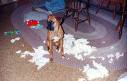 Dr. Becker states
that in more than 10 million homes in America, pet owners leave
home in the morning only to return to a pet that has chewed shoes,
torn pillows, soiled the carpeting or worse. Often times, pet
owners assume the dog is "just being a dog" or the
owner feels guilt for leaving the pet home alone. Other times,
the pet is sent to an animal shelter when the behaviors become
intolerable. Dr. Becker states
that in more than 10 million homes in America, pet owners leave
home in the morning only to return to a pet that has chewed shoes,
torn pillows, soiled the carpeting or worse. Often times, pet
owners assume the dog is "just being a dog" or the
owner feels guilt for leaving the pet home alone. Other times,
the pet is sent to an animal shelter when the behaviors become
intolerable.
The bad behavior may actually
be the result of a medical condition known as separation anxiety
and it affects an estimated 17 percent of dogs. In 2007, Eli
Lilly and Co. introduced Reconcile, the first selective serotonin
reuptake inhibitor (SSRI) approved by the FDA for treatment of
canine separation anxiety in conjunction with a behavior modification
plan.
Reconcile is a once-daily,
chewable, flavored tablet that reduces inappropriate behaviors,
minimizes the pet's distress and increases receptivity to the
BOND at-home behavior modification training program. The BOND
behavior modification program is an easy-to-implement, at-home
training plan developed by Lilly and a team of veterinary behaviorists
as well as veterinarians.
The simple plan allows pet
owners to take an active role in the treatment of their dog's
separation anxiety. Dog owners whose dogs have been prescribed
Reconcile receive educational materials to enable them to follow
an easy four-step training plan to reinforce positive pet behavior,
which helps to reduce or eliminate inappropriate responses to
anxiety.
With the BOND™ training
program, there are four simple things to remember:
- Be positive
- Only reward calm behavior
- No more drama when coming
and going
- Develop the dog's independence
This process may take a week
or more, depending on the individual dog. Remember to stick with
it, be positive and reward your dog for good behavior. Consistent
training, along with the daily dose of Reconcile™, will
help you manage separation anxiety and restore the positive emotional
bond you have with your pet.
http://www.PetConnection.com
Hear Dr. Marty Becker on Animal Radio®
Genius
Dog
Barbara Smuts, Prof.
of Psychology, Univ. MI
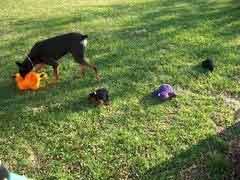 Barbara Smuts, a
Professor of Psychology at the University of Michigan who studies
canine social behavior, thought this dog owner must be a crackpot.
The woman from Maryland kept insisting her dog was going into
the backyard and arranging his many plush toys into geometric
shapes of circles, parallel lines and triangles. Come on, you
must be helping him, responded Smuts. And if you're not, the
neighbors must be playing a trick on you, she said. The woman
steadfastly ruled out Smuts's reservations, and the professor
eventually flew to Maryland to visit the woman and her dog, Donnie. Barbara Smuts, a
Professor of Psychology at the University of Michigan who studies
canine social behavior, thought this dog owner must be a crackpot.
The woman from Maryland kept insisting her dog was going into
the backyard and arranging his many plush toys into geometric
shapes of circles, parallel lines and triangles. Come on, you
must be helping him, responded Smuts. And if you're not, the
neighbors must be playing a trick on you, she said. The woman
steadfastly ruled out Smuts's reservations, and the professor
eventually flew to Maryland to visit the woman and her dog, Donnie.
Smuts now believes Donnie is,
in fact, creating the displays. Donnie, a male Doberman, was
at first reluctant to perform for Smuts, probably because he
was more excited about having a new person in the house. So she
suggested the woman install a few security cameras, which recorded
Donnie in the act, moving his more than 80 plush toys into geometric
shapes and creating social vignettes with them. "She actually
got some significant footage of him,'' Smuts said. "Not
as much as I would like, but enough to show that he's doing it,
and it's not something he has been trained to do, and it's completely
spontaneous.''
"Donnie can't be the only
dog in the world who does this,'' Smuts said. "I'm hoping
that people will see this show and say, 'Hey, that's like my
dog, or I know a dog that does that,' and e-mail me. We need
a larger sample to find out what's going on.'' Smuts has a Web
site at www.sitemaker.umich.edu/barbara.smuts/home.
You can e-mail her at bsmuts@umich.edu.
Hear Professor Smuts on Animal Radio®
Veterinary
(CSI) Unit
Melinda Merck, DVM
 Dr. Merck, who is a forensic veterinarian
with the ASPCA, has written a new textbook designed to better
help veterinarians and animal welfare professionals in the understanding
and practice of veterinary forensics. The book, "Veterinary
Forensics: Animal Cruelty Investigations" is a reference
manual designed to give veterinarians, pathologists and investigators
the knowledge they need to understand the process of animal cruelty
investigations and to correctly perform the necessary forensic
examinations of animals. Dr. Merck, who is a forensic veterinarian
with the ASPCA, has written a new textbook designed to better
help veterinarians and animal welfare professionals in the understanding
and practice of veterinary forensics. The book, "Veterinary
Forensics: Animal Cruelty Investigations" is a reference
manual designed to give veterinarians, pathologists and investigators
the knowledge they need to understand the process of animal cruelty
investigations and to correctly perform the necessary forensic
examinations of animals.
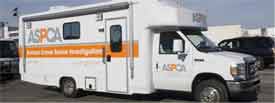
The ASPCA has also recently
unveiled a "forensics first"-the nation's first-ever
"Mobile Animal Crime Scene Investigation (CSI) Unit."
The mobile forensic vehicle will operate under the leadership
of Dr. Merck, who is the nation's only "animal CSI,"
and who most recently assisted Federal authorities in the Michael
Vick investigation. The mobile unit, which will be available
to assist at crime scenes nationally, will allow Dr. Merck to
examine and care for animals found at suspected crime scenes
and includes a surgical suite for animals in need of urgent care.
Dr. Merck joined the ASPCA
in January 2007 as a forensic veterinarian and frequently provides
training for veterinary and law enforcement professionals nationwide
on the use of veterinary medical knowledge in the investigation
and prosecution of animal cruelty cases. She often testifies
as a forensic veterinary expert for animal cruelty cases around
the country, including cases involving animal hoarding, dog fighting
and animal torture, such as 2006's high profile "puppy torture"
case in Atlanta. Besides using her expertise in the Michael Vick
dog fighting case, Dr. Merck has also provided expertise to the
television show CSI.
http://www.ASPCA.org
http://www.FightCruelty.org
http://www.veterinaryforensics.com
Hear Dr. Merck on Animal Radio®
Why
I Married My Cat
Carol Turner, Tom
Cat Towers
 I never believed in love at first
sight until April 16, 2001, when I was bowled over by the saddest
orange eyes in the world gazing deeply into mine. They belonged
to a tabby Persian cat crying on his doorstep. He then ran across
the road and jumped through a window into my car as we were visiting
someone on his street. He was starving, just a bag of bones,
under a massive lump of ungroomed fur riddled with fleas. I instantly
fell in love with him so I begged and bought him from his owner,
who couldn't cope with him, for a bottle of cheap champagne. I never believed in love at first
sight until April 16, 2001, when I was bowled over by the saddest
orange eyes in the world gazing deeply into mine. They belonged
to a tabby Persian cat crying on his doorstep. He then ran across
the road and jumped through a window into my car as we were visiting
someone on his street. He was starving, just a bag of bones,
under a massive lump of ungroomed fur riddled with fleas. I instantly
fell in love with him so I begged and bought him from his owner,
who couldn't cope with him, for a bottle of cheap champagne.
I named him Tushtots, and wanted
to show him just how much he is loved and adored by me. I also
wanted to give him a very special day, as he just loves being
the center of attention, so I married him!
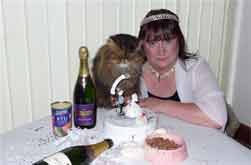
Tushtots and I had a "Catmitment
Ceremony" rather like a wedding service, and it really was
a fabulous thing to do! I put on a posh frock and tiara to get
into the spirit of things. My other cats, Willi Whizkas and Little
Dumpty Roo, were "best-mog" and "bride-mog"
respectively. Little Dumpty Roo was even complete with a catnip
bouquet, which she later ate! My husband also participated by
giving me away, while the bridal march "Love Cats"
by The Cure played on.
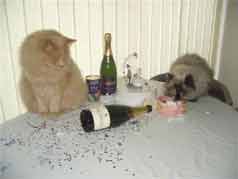 During
the ceremony, I promised to love him unreservedly and to ensure
his tubby tummy was filled with the very finest foods a feline
could wish for. I also promised to cuddle and kiss him on demand
and to tickle his tummy whenever he rolled over with his fat
furry legs in the air. During
the ceremony, I promised to love him unreservedly and to ensure
his tubby tummy was filled with the very finest foods a feline
could wish for. I also promised to cuddle and kiss him on demand
and to tickle his tummy whenever he rolled over with his fat
furry legs in the air.
Tushtots vowed not to snore,
hog the bed, fidget or scratch when he cuddles up to me at night.
He also swore not to burp tuna breath over me and not to put
muddy pawprints on my white duvet cover.
Some people, understandably,
think I am barking mad! (Well, we Brits are made about our pets
- to the point of eccentricity!) But those with cats think that
every cat and its guardian should have a "Catmitment Ceremony"!
It was just a bit of fun and an excuse for some cake and champagne
and to let Tushtots know just how much he is loved and adored.
We have just learned that Tushtots
has chronic kidney failure. As the love affair of the century,
we don't know how long we have together and my heart is shattered
at this. Also, he has not been keeping his vows! He has started
hogging the bed again, snoring like a Vietnamese Pot Bellied
Pig with bad breath all night, so very soon we could be having
another ceremony to renew our "Catmitment" vows!
Please check out the book,
Willi Whizkas, about the cats at Tom Cat
Towers.
http://www.thedailymews.com
Hear Carol Turner on Animal Radio®
Foreclosure PetsInnocent
Victims
 Many
people out there are experiencing financial troubles as the mortgage
foreclosure crisis continues to expand across the nation. Unfortunately,
as their owners find themselves facing eviction, many pets become
the forgotten, and truly innocent, victims as well. It can be
a heartbreaking and frustrating situation for many people. Many
people out there are experiencing financial troubles as the mortgage
foreclosure crisis continues to expand across the nation. Unfortunately,
as their owners find themselves facing eviction, many pets become
the forgotten, and truly innocent, victims as well. It can be
a heartbreaking and frustrating situation for many people.
Foreclosure-websites have stated
that more than 8 million adjustable rate mortgages were given
between 2004 and 2006. It is expected that almost 1.1 million
of these will be foreclosed before the problem goes away. Given
the current rate of pet ownership to be about 60% of the population,
it is very easy to calculate the thousands of dogs, cats and
other pets that could potentially face abandonment.
In Franklin County, Ohio, foreclosures
this year are up more than 4 times last year's rate. Their local
animal shelter states that about 20% of owners surrendering pets
are doing so due to eviction proceedings. A humane society near
San Diego California reports receiving 20-30 calls per day from
owners looking to relinquish the family pet.
But others leave their pets
behind on false hopes that someone will come along to care for
them. In Cincinnati, Ohio, more than 50 cats were found in a
house after the owner's eviction. Cases of starving, dehydrated
and occasional dead pets have become common sights for real estate
agents and law enforcement officers. The unfortunate truth is
that many of these pets are left and months can pass before someone
comes to check on the property. What's worse? In most cities,
pets are considered to be personal property and can't be removed
until after a foreclosure sale.
Many people might wonder how
anyone could leave a pet behind during these trying times. But
for thousands of people, their pets, regardless of their status,
become just another weight, hastening their spiral downward.
It is all too easy to just walk out the door, leave everything
and hope for a new beginning somewhere else.
As difficult as times may seem,
preparation can help to insure that your pets don't suffer similar
fates. If you are facing foreclosure and cannot care for your
pets, contact your local shelter or humane society. In some instances,
rescue organizations may be available although their foster home
space is very limited. If you must surrender your pet, do so
before the eviction time comes. Gather any pertinent medical
information from your veterinarian and let the shelter staff
know about any behavior issues unique to your pet. These steps
could spell the difference between a new home for your pet or
potential euthanasia.
Dr. Jim Humphries, Veterinary News Network, for Animal Radio®
Hear about Pets and Foreclosure
on Animal Radio®
|
|
Coming Up on Animal Radio®:
Stress
Relief Combat Dogs
By Spc. Rick L. Rzepka
1st Brigade Combat Team, 101st Airborne Division (AA) PAO
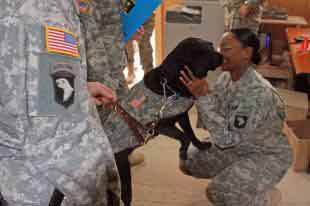 COB
SPEICHER, Iraq - Ever had a Sergeant 1st Class lick your face?
For many Soldiers at Contingency Operating Base Speicher, Iraq,
these are not freakish events, but regular occurrences. COB
SPEICHER, Iraq - Ever had a Sergeant 1st Class lick your face?
For many Soldiers at Contingency Operating Base Speicher, Iraq,
these are not freakish events, but regular occurrences.
Sgt. 1st Class Boe is the newest
member of the 85th Medical Detachment Combat Stress Control unit
at COB Speicher, and is one of two K-9 therapists being used
by the Army to help prevent and control the stresses of living
in a combat zone.
Along with Staff Sgt. Mike
Calaway, an occupational therapy assistant with the Combat Stress
Control unit, Boe is part of a new Army program, which encourages
Soldiers to interact with dogs in order to help relieve the psychological
stresses of war.
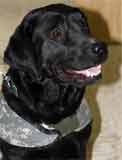 The
dogs, two Black Labrador Retrievers, were donated and trained
by America's VetDogs and are the first dogs to be used in a combat
zone for therapeutic purposes. The organization is part of the
larger non-profit group, Guide Dog Foundation for the Blind,
which has been helping provide guide dogs for the blind since
the 1940s. Recognizing a growing need for specialized service
dogs for America's fighting forces; VetDogs recently initiated
the therapy dog concept. The
dogs, two Black Labrador Retrievers, were donated and trained
by America's VetDogs and are the first dogs to be used in a combat
zone for therapeutic purposes. The organization is part of the
larger non-profit group, Guide Dog Foundation for the Blind,
which has been helping provide guide dogs for the blind since
the 1940s. Recognizing a growing need for specialized service
dogs for America's fighting forces; VetDogs recently initiated
the therapy dog concept.
The dogs are intended to provide
comfort and relaxation through physical interaction, whether
it's a game of fetch or just a peaceful few minutes of petting.
"I felt more relaxed after
being able spend some time with her," said Sgt. 1st Class
Brenda Rich, 1st Brigade Combat Team, 101st Airborne Division
(Air Assault) Medical Operations. "For a few minutes it
was just me and the dog and nothing in this environment seemed
to matter."
Calaway spent two weeks training
with Boe in New York City to develop a bond, before the pair
was sent to Iraq to take on the challenge of helping Soldiers
cope with a deployment to Iraq.
"She's a very well trained
and very intelligent animal," said Calaway who recently
introduced Boe to Soldiers from the 1st Brigade Combat Team,
101st Airborne Division at COB Speicher. "So far we've had
an outstanding response from Soldiers," he said, "whether
they need help or not."
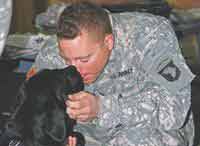 Deployments
can create several different kinds of stressors, said Calaway,
and Boe helps to break the ice, allowing Soldiers to open up
about ongoing issues in Soldiers lives. Deployments
can create several different kinds of stressors, said Calaway,
and Boe helps to break the ice, allowing Soldiers to open up
about ongoing issues in Soldiers lives.
The major types of stress deployed
Soldiers must deal with include operational stress, homefront
stress and sleeping issues, said Calaway.
"The Soldiers absolutely
love her," said Maj. Charles Kuhlman, 1st BCT Chaplain.
Often Soldiers on outlying
bases will befriend stray dogs for companionship and to get a
feel for home, said Kuhlman. "Dogs make a huge difference
in morale."
T
 6
Degrees Could Change the World 6
Degrees Could Change the World
We will speak with Explorer Mark Lynas regarding the upcoming
National Geographic Channel (NGC) show Six Degrees Could Change
the World premiering on Sunday, February 10 at 8 PM
ET/9PM PT. The show is a 2-hour special that illustrates the
devastating ecological impact that each single degree increase
in temperature could have on our planet over the next century.
The show is loosely based on Lynas', National Geographic book
(of the same name) and travels to five continents to join the
world's top climate researchers as they decipher the warning
signs of global warming that are visible today.
Six Degrees Could Change the World also presents
solutions ranging from simple to extreme that could help curb
impending disasters and shows how ordinary citizens around the
world have already experienced dramatic changes in their everyday
lives due to climate shifts over recent years, and how it is
affecting the animals.
http://www.ngcsixdegrees.com
|
|
| ANIMAL
RADIO®
PRODUCT REVIEWS for
February |
|
 (rated 5 out of 5 paws) (rated 5 out of 5 paws)
Feeding Frenzy Toy
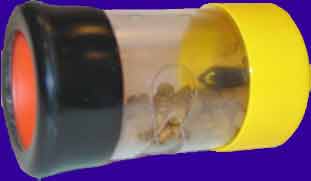 There
are several reasons to get the Feeding Frenzy Cat Toy. While
I used it on my cat that needed a job (I know - it is usually
the dogs who need jobs!), it is also a great way to fight boredom
and obesity. There
are several reasons to get the Feeding Frenzy Cat Toy. While
I used it on my cat that needed a job (I know - it is usually
the dogs who need jobs!), it is also a great way to fight boredom
and obesity.
Even though my cat is not overweight, he had fun for many hours
pushing the toy around and even attracted the attention of the
other cats in the household.
It's so easy to use. All you
have to do is fill it with treats or dry cat food if your pet
is overweight. It will make them work for their food, just as
they were meant to do in nature. As it is important that an overweight
cat lose weight slowly, this will allow you to control their
intake.
There are very few good cat
toys on the market and this is one that will both entertain and
is good for their health.
http://www.phatcattoys.com
 (rated 4 and 1/2 out of 5 paws) (rated 4 and 1/2 out of 5 paws)
Perfect Litter
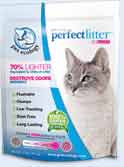 The first thing I noticed about
this cat litter was that it is so lightweight. In fact, it weighs
70% less than other litters. The first thing I noticed about
this cat litter was that it is so lightweight. In fact, it weighs
70% less than other litters.
The next thing I noticed was
that it has an "Alert Indicator" which can help warn
you if your cat may be suffering from Feline Lower Urinary Tract
Disease (FLUTD). The color in the litter can actually change
to a dark pink color if your cat has an infection. There are
different degrees of pink which can indicate if your cat has
a mild infection (light pink) up to a serious infection (dark
pink). But, it may also show false readings if your cat eats
too fast or drinks "hard" water.
It is Eco-Friendly, natural
and bio-degradable. It is a clumping litter and can be flushed
down the toilet or disposed of in the trash. While some cats
may have to get used to this litter, my cats immediately took
to it (they never have a problem with trying new litters).
Unfortunately, due to the fact
that it is very lightweight, my cats were able to scatter it
well outside the litter box. But, I do like the fact that I can
monitor my cats' urinary issues.
http://www.petecology.com
See other reviews at AnimalRadio.com.
Send products for review on-air and in this newsletter to: Animal
Radio Network™ Product Reviews, 233 East 330 North, Kanab,
Utah 84741. Product may not be returned. Allow 5 weeks for review.
|
Animal Minute on
Animal
Radio®
with Britt Savage |
Dogs Detect Cancer in Patients'
Breath
 Recent
studies by Pine Street Foundation, a cancer research organization
in San Anselmo, California shows that a dog can smell a human's
breath and detect cancer. Recent
studies by Pine Street Foundation, a cancer research organization
in San Anselmo, California shows that a dog can smell a human's
breath and detect cancer.
In fact, with only a few weeks
of training, most household dogs can learn to tell the difference
between breath samples of healthy people or those with lung and
breast cancer.
The earlier cancer is detected,
the better chance someone has of surviving cancer. And now, researchers
are hoping that man's best friend, dog, can help with early screening
and detection.
"Salamander Man"
Finally Captured
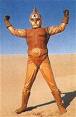 Police
in Amsterdam say they have finally caught the "Salamander
Man," a thief they have been hunting for months. The "Salamander
Man" got his name because of his unique strategy for gaining
entrance into people's homes by talking his way into the homes
saying he was looking for his lost salamander, hamster or iguana. Police
in Amsterdam say they have finally caught the "Salamander
Man," a thief they have been hunting for months. The "Salamander
Man" got his name because of his unique strategy for gaining
entrance into people's homes by talking his way into the homes
saying he was looking for his lost salamander, hamster or iguana.
Once inside a house, the man
stole wallets and loose cash. Police arrested him after a tip
off and found nine empty wallets in his car, which had been stolen
the day before.
Apparently, around 60 people
or so let Salamander Man into their homes.
Britt Savage is a regular
Animal
Radio® correspondent as well as an incredibly talented
musician! She can be heard daily on Animal Radio Network.LISTEN TO ANIMAL RADIO NETWORK NOW
Veterinary Minute
on Animal Radio®
with Dr. Jim Humphries |
Pet
Smiles Go High Tech!
 Although many of us dread the
visit, we go to our dentist routinely to insure our mouth stays
healthy and our smile bright. Our pets can also benefit from
a visit to their dentist. But beyond routine dental cleanings,
many pet owners are now opting for advanced dental work. Will
we soon be seeing Boxers with braces? Although many of us dread the
visit, we go to our dentist routinely to insure our mouth stays
healthy and our smile bright. Our pets can also benefit from
a visit to their dentist. But beyond routine dental cleanings,
many pet owners are now opting for advanced dental work. Will
we soon be seeing Boxers with braces?
For us, going to the dentist
will often include services ranging from dental x-rays and whitening
to repairing fractured teeth. As the human-animal bond continues
to deepen, more pet owners want the same sort of service for
their pets. And fixing their pet's smile is a job for the Veterinary
Dentist!
More than 85% of our pets will
have dental disease by the time they are three years old. But
many of our pets will also suffer from broken, diseased, or crooked
teeth. For many years, extraction of the offending teeth was
the typical solution to provide relief. Now, with the advent
of digital dental x-ray machines, veterinarians and even special
veterinary dentists can more accurately determine the health
of the pet's mouth and tailor a solution to save the pet's teeth.
Dental x-rays are a common
service for us when we visit the dentist. But our pets have not
always been so lucky. The importance of dental x-rays cannot
be overstated. Even if your pet's mouth looks healthy, chances
are that some sort of problem lies deeper.
According to Dr. Brett Beckman,
President of the American Veterinary Dental Society, 42% of cats
and 28% of dogs have hidden dental problems. Dr. Jan Bellows,
a Diplomate in the American Veterinary Dental College agrees.
"Sixty percent of the tooth lies under the gum line. Since
companion animals don't talk (to tell us where the pain is),
x-rays help the veterinarian see what's below."
Normally, our canine friends should have 42 teeth. But, for many
toy breed dogs and short-faced breeds, like Pugs, this number
can cause crowding and mal-alignment. It is not uncommon to see
a Shih Tzu or Yorkie with teeth that have rotated. Additionally,
dogs with under-bites and over-bites also occur. All of these
conditions can make it difficult, or even painful, for the pet
to properly chew food. Dr. Bellows says "teeth that are
mal-aligned are very common and can lead to a painful mouth if
not treated by selective extractions, orthodontic tooth movement
or crown reduction and restoration." Yes, you read that
right - braces for your pet!
Cats have their own special
dental problem. Due to reasons that have not fully been determined,
cats will often develop a painful erosion of tooth enamel called
a cervical line lesion or neck lesion. As the normal enamel is
lost, the pulp cavity of the tooth is exposed to the environment,
causing painful stimulation of nerves. Extraction of the tooth
is often the only solution.
Trauma to pet's teeth is an everyday problem at the veterinary
office and happens from a variety of means. Some pets will chew
rocks or sticks and fracture their teeth, exposing the sensitive
pulp cavity. Police dogs are at high risk for breaking the large
canine teeth up front during their rigorous duties. Dr. Beckman
reports that he has been able to save several of these broken
teeth using restorative techniques and chrome/nickel crowns,
allowing the canine officer to return to his duties and, of course,
brag to his buddies. Most dental experts agree that if the fractured
tooth is healthy, pet owners should allow their veterinary dentist
to perform a root canal and restore the tooth rather than simply
extract it.
Even teeth suffering from advanced
periodontal disease may be saved with the combination of right
owner, cooperative pet and the veterinary dental team. Veterinary
oral surgery is now on the rise as pet owners do whatever they
can for their four-legged friends. After oral surgery, the at-home
care of the patient is vital to the recovery and the success
of the procedure. Without a compliant pet and a committed owner,
the chances for saving the teeth are greatly diminished and extraction
of those teeth may be the better option. Dr. Bellows' website,
www.dentalvet.com,
describes many of these oral surgeries.
The use of a newly developed barrier sealant is another high-tech,
but low cost method to help keep your pet's mouth healthy. Oravet®
is a specially designed gel that actually adheres to the tooth
surface and repels plaque forming bacteria. In just one minute
per week, you can now minimize the accumulation of plaque and
tartar build-up.
It takes a whole team to help
keep your pet's smile healthy. Talk with your family veterinarian
and ask if dental radiographs are available in your area. Find
out what at-home dental products are recommended by your veterinarian
and be sure to use them routinely. Visit www.MyVNN.com to watch a video about how
advanced veterinary dentistry is helping pets worldwide.
Dr. Humphries is a veterinarian
in Colorado Springs and the National News Director for Veterinary News Network. Hear the Veterinary
Minute exclusively on Animal Radio®-LISTEN TO ANIMAL RADIO NETWORK NOW
 Email
your inventions to: root@AnimalRadio.com Email
your inventions to: root@AnimalRadio.com
Pet-2-Ring
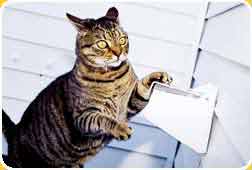 A
Pet Doorbell Products Inc. is proud to introduce to all pet lovers
a Useful, Unique and Entertaining New Pet Product, the Pet-2-Ring
TM Doorbell. A
Pet Doorbell Products Inc. is proud to introduce to all pet lovers
a Useful, Unique and Entertaining New Pet Product, the Pet-2-Ring
TM Doorbell.
So what is the Pet-2-Ring TM
Doorbell? What does it do? Why do we need such a product?
Have you ever owned a cat that
is outside and does not know how to let you know that it wants
to come inside? Have you ever owned a dog that wants to go out
to relieve itself and just sits near the door?
How many screen doors has your
cat destroyed? How many times did your dog urinate on the floor
or damage your door only because another family member did not
walk the dog?
Have you thought about a doggy
door? But the problem is that first you have to cut a hole in
your door, and then it allows unwanted guests in the house such
as raccoons and skunks, and if you have a large doggy door, it
will also allow burglars into your home.
Now with the Pet-2-Ring TM
Doorbell "Your Pet's Own Doorbell" your cat or dog
can ring their doorbell just like you or I ring a doorbell. This
is clearly demonstrated in the training video included with your
purchase.
We always knew that dogs could
be trained. Now you can see that the cat is also trainable and
very intelligent. To view the video, please visit http://www.pet2ring.com
Hear Pet Inventions on Animal Radio®
| Ask the Cat Coach with
Marilyn Krieger |
Dear Cat Coach,
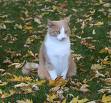 I really want to convert my outdoors
cats into a kitty that lives in doors all day long. I miss having
the company of my Petey while I'm reading my books, taking my
naps or watching television. I made the mistake of letting him
outside for short rambles a couple of years ago. The rambles
become longer, now he doesn't want to spend much time with me.
How do I make him a happy inside cat again? I really want to convert my outdoors
cats into a kitty that lives in doors all day long. I miss having
the company of my Petey while I'm reading my books, taking my
naps or watching television. I made the mistake of letting him
outside for short rambles a couple of years ago. The rambles
become longer, now he doesn't want to spend much time with me.
How do I make him a happy inside cat again?
- Lonely
Dear Lonely,
Now is the purrfect time to transition your kitty back into an
indoor loving cat. Most cats do not like the rain and snow and
would prefer spending their time curled up sleeping where it's
warm and dry.
Make the inside more interesting
then the outside. Provide tall cat trees for Petey, as well as
plenty of interactive toys such as puzzle boxes. Petey will also
appreciate boxes and places to hide in. Treats can be hidden
in the puzzle boxes as well as in the cat trees.
Start by feeding Petey only
inside the house. Make sure that there is no food available for
him outside. After he's eaten and had his nap, engage him in
play. Gradually extend the time he's inside after he's eaten
until he's a full time indoor cat.
Interact with Petey before
feeding him, by engaging him in his favorite activities. If it's
more fun inside then outside, then he won't want to go outside.
If Petey likes to be combed, then have daily grooming sessions.
If Petey is a lap cat, make sure that you have a lap available
for him to curl up and go to sleep on. Have Petey's favorite
toys available for him and also provide him with interactive
toys.
By making the house more interesting
then the outdoors and with the help of increment weather, Petey
should eventually find the house more appealing then the cold
outdoors.
Marilyn Krieger, CCBC is
a Certified Cat Behavior Consultant certified through, and a
member of the Board of Directors of, The International Association
of Animal Behavior Consultants. She can be reached for phone
and on-site consultations to help solve cat behavior problems
either by e-mail marilyn@thecatcoach.com
or by phone: 650 780 9485. Marilyn is the Cat Behaviorist for
the Cat Channel, Cat Fancy Magazine's web presence. Additionally,
Marilyn teaches cat behavior classes and is available for speaking
engagements. You can find out more about The Cat Coach at www.thecatcoach.com.
Copyright 2008 Marilyn Krieger, CCBC All Rights Reserved.
| For
Pet's Sake with Karen
Lee Stevens |
Good-Bye Gemina
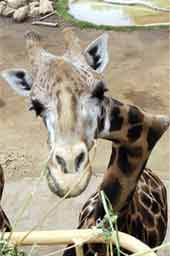 Our collective hearts broke last
month as we said good-bye to one of Santa Barbara's most beloved
public figures. Gemina, the crooked-necked giraffe who resided
at the Santa Barbara Zoo for nearly two decades, was humanely
euthanized on January 9. She was 21 years old, geriatric by giraffe
standards. Our collective hearts broke last
month as we said good-bye to one of Santa Barbara's most beloved
public figures. Gemina, the crooked-necked giraffe who resided
at the Santa Barbara Zoo for nearly two decades, was humanely
euthanized on January 9. She was 21 years old, geriatric by giraffe
standards.
"Her health had been declining
over recent weeks, and she finally stopped eating," read
a statement on the Zoo's Web site. "Although we don't know
what caused her poor health, all signs indicate old age and not
the condition of her neck. Gemina lived beyond the average life
expectancy for a female giraffe."
As a kid growing up in sleepy
Santa Barbara (at least, that's the way it was in the early '70s),
I spent many happy hours volunteering at the Santa Barbara Zoo,
which at that time was called the Child's Estate, named after
Lillian Child, a one-time owner of the property. With my bright
yellow t-shirt with the words "Junior Volunteer" emblazoned
across the front, I eagerly shared my enthusiasm and knowledge
of the many animal species who called 500 Niños Drive
home. These were simpler times, when you could still enter the
barnyard exhibit to pet the sheep and goats, and 25 cents bought
you a paper tray full of fish to toss to the barking sea otters.
I remember the giraffe exhibit, of course, but it would still
be many years before Gemina's arrival at the zoo.
I'll stick my neck out and
admit that I don't visit zoos much these days. There's something
a bit sad about staring into the eyes of a captive animal and
seeing an intelligent, sentient being staring back at you. Because
of my ever-shrinking zoo visits, I only met Gemina once or twice
in all the years she lived in Santa Barbara. So when I sat down
to write this farewell piece to her, I realized I was a little
short on stories about this long-legged leaf-eater. To help me
in my quest, I sent out an e-mail message, asking my friends
and colleagues to share their fondest memories about Gemina.
Nicole Boyd, a volunteer at
the zoo, who worked closely with the giraffe, told me in a brief
telephone conversation that both she and Gemina turned 21 last
year. "It was sad to say good-bye, but it was for the best,"
Nicole said. "She will always have a soft spot in my heart."
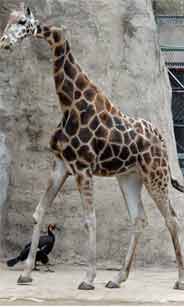 Surprisingly,
three of Patty Fry's grandchildren also celebrated their 21st
birthdays in 2007. "I remember the first time I saw Gemina,"
the Ojai, California resident writes. "I was with my six
grandchildren, who were all under the age of six. Gemina was
still small herself and she looked as if life, for her, would
be awkward. At first, we all felt sorry for her. When we realized
that she functioned just fine-that her crooked neck was not a
handicap, just an unusual quirk of nature, we rejoiced in her
beauty and grace. It's not easy to be graceful in Gemina's position,
but she was, without a doubt, the most graceful of all Santa
Barbara Zoo giraffes. Thinking back, I doubt that the children
and I looked at any of the other giraffes during our many subsequent
visits to the zoo. We spent all of our time admiring Gemina.
It was fun watching her grow as my grandchildren grew." Surprisingly,
three of Patty Fry's grandchildren also celebrated their 21st
birthdays in 2007. "I remember the first time I saw Gemina,"
the Ojai, California resident writes. "I was with my six
grandchildren, who were all under the age of six. Gemina was
still small herself and she looked as if life, for her, would
be awkward. At first, we all felt sorry for her. When we realized
that she functioned just fine-that her crooked neck was not a
handicap, just an unusual quirk of nature, we rejoiced in her
beauty and grace. It's not easy to be graceful in Gemina's position,
but she was, without a doubt, the most graceful of all Santa
Barbara Zoo giraffes. Thinking back, I doubt that the children
and I looked at any of the other giraffes during our many subsequent
visits to the zoo. We spent all of our time admiring Gemina.
It was fun watching her grow as my grandchildren grew."
Gemina was popular with the
adults as well. "I am a docent at the S.B. Zoo and Gemina
was one of my favorite animals to visit every week," writes
Sharon Vaughn. "I enjoyed watching Gemina as she gently
positioned herself at the giraffe public feeding platform while
the male giraffe, Taru, attempted to dominate the whole area
wanting all the biscuit treats for himself. Being so tall, Taru
was able to raise his head above the highest railing while the
other female giraffes could not. Gemina would wait patiently
until someone took notice of her and they went to the side to
give her one of the biscuits, despite the fact that Taru was
trying to swing his big neck far enough to intervene and persuade
the person with his 17" tongue to give the biscuit to him."
"We always called her
Achoo," writes Sharon O'Reilly. "A few years back,
my granddaughter, McKenzie, who goes to the zoo all the time,
was visiting Gemina and the giraffe sneezed on her. So, from
then on, if you asked McKenzie what a lion said, she would roar;
when asked what an elephant said, she would trumpet; and when
asked what a giraffe said, she would say 'Achoo!' Sorry to see
her pass over.she was one-of-a-kind and we were lucky to have
her at OUR zoo."
Gemina was truly heads above
the rest, according to Karen Perkins and Julia DiSieno. "I
appreciate that she seemed to be so happy, never seeming to notice
the crook in her neck that made her so different from all of
the others," writes Karen. "We humans have a lot to
learn." And Julia reminds us, "Gemina was truly a special
animal and living proof that even compromised animals can and
do live good, quality lives in captivity. Rest in peace, pretty
girl."
Gemina touched us all in a
way that only animals can. With grace and charm, the gentle giraffe
with the crooked neck may be gone forever from our view, but
she will remain forever in our hearts.
What are your favorite zoo animal stories? Share them with Karen
(Founder and President of All For Animals, Inc.) by sending her an
e-mail message at karenleestevens@cox.net
|
|
Honoring Instead of Judging
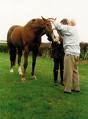 Life seems to run in patterns. Have
you ever noticed that? One pattern that seems to be predominant
at this time is judgment. People act as the judge of what is
right for everything and everyone including their animal kids.
Generally speaking, even with the best of intentions, people
usually are not taking into account their animal kids' feelings,
or if they are taking into account the feelings, they don't take
into account the desire of the animal. Many people, not the readers
of Animal Radio Network, of course, think they are the lord and
master of everything including other humans. It's very important
to remember that people are not the only ones who have the key
to life. If you happen to see someone you know in one of these
examples, remember it's never too late for them to start a new
way of looking at life. Animal kids always forgive us. Life seems to run in patterns. Have
you ever noticed that? One pattern that seems to be predominant
at this time is judgment. People act as the judge of what is
right for everything and everyone including their animal kids.
Generally speaking, even with the best of intentions, people
usually are not taking into account their animal kids' feelings,
or if they are taking into account the feelings, they don't take
into account the desire of the animal. Many people, not the readers
of Animal Radio Network, of course, think they are the lord and
master of everything including other humans. It's very important
to remember that people are not the only ones who have the key
to life. If you happen to see someone you know in one of these
examples, remember it's never too late for them to start a new
way of looking at life. Animal kids always forgive us.
Annie, 5-year kitty, can only drink her food due to a health
issue. She gets bored with her food and loves to taste different
soft foods. She wants to be able to decide whether she likes
the food or not even if she has tried it before and did not like
it at that time. On the other hand, her dad wants to be the judge
of what is right for her. She likes to lick her parents' plates
or bowls after every meal. She enjoys taste testing. Annie wants
to be able to smell the food on the plate even if she rejected
it before. Because, as she says, "Who knows, as I grow more
mature, I just might like the taste." Her dad tells her,
"You didn't like this before and you won't like it now so
you are not getting the plate." (A definite no-no is anything
with onions or chocolate.)
DJ, a 13 year dog barks incessantly to the point his voice is
now permanently hoarse. His parents tell him, "NO, DJ!"
or "Stop it, DJ!" constantly. Animals always need us
to receive what they are doing even if it is something we don't
want. EVERYONE wants to be received. It is so much easier to
receive them and then redirect than to constantly reject them.
Besides, the constant rejection affects the relationship - imagine
what it would be like for you to have someone you love always
rejecting you because you're doing something they don't like.
DJ would just like them to pay attention to what he wants as
well as honoring when he wants it instead of having them decide
if and when he can have something. If he wants a treat from the
cookie jar, he asks for it and would like it when he asks for
it. Waiting sometimes is very different than always being rejected
and having to wait until someone decides they think it is time
to offer a treat. As far as he is concerned, the only good reason
for a treat is that he wants it. DJ wants to be able to taste
their dinner. He has no concern if some people think human food
is not good for dogs. He would like to be honored enough to be
allowed to be the judge of what might be appropriate for him.
He may be "just a dog", but he has feelings, wants
and desires that he would like to see honored.
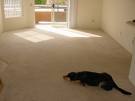 When
people move, they tend to forget to consult their animal kids.
There are so many things that can go wrong with this type of
non-interaction. One thing is that to the animals they see that
their parents just moved and did not give them an active part
in deciding what they wanted or what was best for them. This
type of interaction often upsets the animals emotionally in one
way or another. And the emotional upset often is acted out through
behaviors. Then I get calls from their parents asking why their
animal kids are acting the way they are. One recent call was
about how a woman was having trouble because her dog barks all
day. She and her dog moved far away from their human family.
She rents an apartment with a roommate who also has a dog. Her
dog lives only in her room when she is not home. He is isolated
from everyone most of the time. Before this, they lived with
his doting grandmother. The caller wanted me to make him feel
more comfortable and stop barking. Stating that if he wouldn't
stop barking, she would have to resort to buying a shock collar.
I explained the emotional issues her dog was having and suggested
flower
essences. When
people move, they tend to forget to consult their animal kids.
There are so many things that can go wrong with this type of
non-interaction. One thing is that to the animals they see that
their parents just moved and did not give them an active part
in deciding what they wanted or what was best for them. This
type of interaction often upsets the animals emotionally in one
way or another. And the emotional upset often is acted out through
behaviors. Then I get calls from their parents asking why their
animal kids are acting the way they are. One recent call was
about how a woman was having trouble because her dog barks all
day. She and her dog moved far away from their human family.
She rents an apartment with a roommate who also has a dog. Her
dog lives only in her room when she is not home. He is isolated
from everyone most of the time. Before this, they lived with
his doting grandmother. The caller wanted me to make him feel
more comfortable and stop barking. Stating that if he wouldn't
stop barking, she would have to resort to buying a shock collar.
I explained the emotional issues her dog was having and suggested
flower
essences.
People are so used to being the ones making all decisions about
everything in their lives, they sometimes forget that, if they
are living with animals, they are living with other sentient
beings that are only different than them, not less. From a spiritual
perspective, they have all the same rights and choices as humans
and mostly are quite capable of making appropriate choices for
them in their lives. It would be wonderful to acknowledge them
as that.
The animals who grace our lives are our kindest teachers. They
are willing to forgive us. They do not hold onto grudges because
they live in the present. They teach us to let go of limiting
beliefs by opening our hearts to greater possibilities. When
we understand the lesson, all of us (humans and animals as well)
benefit.
Until next time, I'm Joy reminding you, you can never love your
animal companions too much. You can only love them, hopefully,
enough.
If you would like to
schedule a private session with Joy, call 425-867-1779 or go
through www.TalkWithYourAnimals.com.
If you are interested in being a caller on Talk with your Animals,
please email Martha@AnimalRadio.com
to make arrangements. Joy Turner is a regular Animal Radio®
correspondent. She can be heard daily on Animal Radio Network.
LISTEN TO ANIMAL RADIO NETWORK NOW
 Email
your events to: root@AnimalRadio.com Email
your events to: root@AnimalRadio.com
Mardi Paws
Saturday, February 9, 2008
Holiday Inn Parkside
Missoula, MT
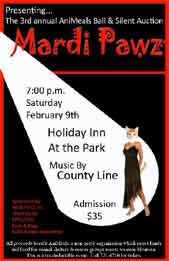 AniMeals
presents The 3rd Annual AniMeals Ball & Silent Auction. AniMeals
presents The 3rd Annual AniMeals Ball & Silent Auction.
Got any artwork that just doesn't fit into your decor anymore?
Think of donating it to the MardiPaws Silent Auction. Your donation
doesn't have to be an original either...it can be a print or
something you bought from your local department store. Anything
will do!
We are going to be back at
the Holiday Inn Parkside this year and will be occupying both
the ballroom and the atrium. The fabulous "County Line"
will be rockin' us into the night! Hope to see you all there!
| Rover, Get Off Her Leg! with
Darlene Arden |
 ASK
"THE DOG EXPERT"
- by Darlene Arden, Certified Animal Behavior Consultant ASK
"THE DOG EXPERT"
- by Darlene Arden, Certified Animal Behavior Consultant
Q. Dear Darlene Arden,
Now that Winter is here, what can I do to help my dog during
this horribly cold weather? Thanks!
- Jessie
A. Dear Jessie,
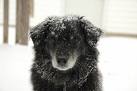 Winter
weather is a real concern. If you have a small dog, he will lose
body heat more quickly so he needs a coat or sweater, as would
a dog like a Greyhound or Whippet who has no hair coat to protect
him from the elements. And did you know that leaving your dog
in the car on a very cold day is as dangerous as leaving him
in the car on a very hot day? For your dog's comfort and safety,
leave him at home while you run errands. Winter
weather is a real concern. If you have a small dog, he will lose
body heat more quickly so he needs a coat or sweater, as would
a dog like a Greyhound or Whippet who has no hair coat to protect
him from the elements. And did you know that leaving your dog
in the car on a very cold day is as dangerous as leaving him
in the car on a very hot day? For your dog's comfort and safety,
leave him at home while you run errands.
Don't forget that the cold weather can cause frostbite, etc.,
in dogs so your dog should never stay out for very long in very
cold weather. Bring him inside where he can be safe and warm.
If your town or city uses salt or sand on the roads, please be
sure to wash and dry your dog's feet as soon as you bring him
inside, otherwise he could be poisoned if he licks salt or ice
melt off his paws, or sickened if he licks off sand.
Think of your dog as you would any family member and keep his
safety and comfort in mind during the cold days of winter.
"Ask the Dog Expert"
is a regular column by Darlene Arden. This month's column features
information found in her book, "The Angell Memorial Animal
Hospital Book of Wellness and Preventive Care for Dogs,"
(McGraw-Hill), which helps you, in concert with your veterinarian,
design a wellness program based on your dog, your lifestyle and
the place where you live, and "Small Dogs, Big Hearts,"
(Howell Book House), and the newly released, "Rover, Get
Off Her Leg!" Further information may also be found on her
website: www.darlenearden.com.
Copyright 2008 by Darlene Arden. All Rights Reserved.
| ANIMAL
RADIO® BOOK REVIEW for February |
|
\(rated 4 and 1/2 out of 5 paws)
 Birder's
Conservation Handbook: 100 North American Birds at Risk By
Jeffrey V. Wells Birder's
Conservation Handbook: 100 North American Birds at Risk By
Jeffrey V. Wells
Paperback: 464 pages
Publisher: Princeton University Press (October 2007)
ISBN-10: 0691123233
ISBN-13: 978-0691123233
This book contains everything
you need to know on North America's one hundred most threatened
birds. Along with pictures of these birds, it not only informs
you of where you can find these particular birds (where they
breed and where they go in the winter), but it also lists the
threats they face, the conservation efforts that have taken place
so far and actions you can take to protect these birds and their
habitats.
Anyone who is a bird watcher
can tell you that our birds are declining. Even though some of
the information you will find is alarming and discouraging, perhaps
it is a "wake-up" call.
There is still time to be proactive
and save our most vulnerable birds. The author has even included
some things you can do at home like buying recycled paper products
and decreasing pesticide use. It's not enough to sit back and
watch these birds anymore. Even the novice bird watcher can help
with their protection.
You can't help but pick up
this book and learn something immediately on these birds, all
the while feeling the need to help.
\(rated 3 and 1/2 out of 5 paws)
 Dogs by Catherine Johnson and William Wegman Dogs by Catherine Johnson and William Wegman
Hardcover: 512 pages
Publisher: Phaidon Press Inc. (October 2007)
ISBN-10: 0714848034
ISBN-13: 978-0714848037
What first attracted me to
this book was its cover. It is beautifully done and reminds me
of a brooch my mother used to wear. But when I opened the book,
it took me back even farther.
Inside you will find over 450
vintage photographs of dogs in almost every setting imaginable.
The snapshots start at the turn of the century and go to the
early 1950's.
Ever wonder if pets played
a big part in the lives of people in centuries past? This books
shows you that our beloved dogs have always played a huge part
in our lives.
This is one of those beautiful
books you will want to display on your coffee table and pick
up over and over again, as each time you will see something new.
See other reviews at AnimalRadio.com.
Send books and literature for review on-air and in this newsletter
to: Animal Radio Network™ Book Reviews, 233 East 330 North,
Kanab, Utah 84741. Product may not be returned. Allow 5 weeks
for review.
|
Does Your Pet Have Teeth?
 If
you can answer "yes" to the above question, your pet
needs regular dental care. Yes, even your pet can't escape the
"dentist's" chair. She doesn't get to swish and have
the cool bib wrapped around her neck, but she does need regular
care. If
you can answer "yes" to the above question, your pet
needs regular dental care. Yes, even your pet can't escape the
"dentist's" chair. She doesn't get to swish and have
the cool bib wrapped around her neck, but she does need regular
care.
According to the American Veterinary
Dental Society (AVDS), 80% of dogs and 70% of cats have some
sign of oral disease by the age of three.
You can help to keep your pet's
teeth healthy by:
- Having professional dental
exam and care provided by your veterinarian
- Providing dental care at home
based on your vet's recommendations
- Maintaining regular professional
check ups
- Treating any symptoms quickly
Symptoms of Dental Problems
(If your pet is displaying any of the following symptoms, please
seek professional dental care):
- Bad breath (halitosis)
- Broken or missing teeth
- Changes in eating (usually
decreasing)
- Chewing habits
- Depression
- Gum issues red or swollen
or painful (gingivitis, periodontal disease)
- Nasal discharge
- Pawing at the face or mouth
- Swelling or tearing below
one eye
- Weight loss
- Yellow teeth
Why is Dental Health So Important?
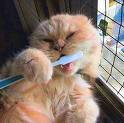 Dental health
also affects other parts of the body. Plaque which is made up
of bacteria, saliva and cellular debris builds up on the enamel
of the teeth. When combined with food particles, it becomes calcified
and is now tartar. Tartar can lead to tooth decay and other oral
diseases if not treated. In addition, it can cause a bacterial
infection which then travels through the blood to other vital
organs and can result in serious illness and even death. Dental health
also affects other parts of the body. Plaque which is made up
of bacteria, saliva and cellular debris builds up on the enamel
of the teeth. When combined with food particles, it becomes calcified
and is now tartar. Tartar can lead to tooth decay and other oral
diseases if not treated. In addition, it can cause a bacterial
infection which then travels through the blood to other vital
organs and can result in serious illness and even death.
Domestic cats are very susceptible
to Feline Oral Resorptive Lesions. In fact, these painful lesions
are the most common tooth disease in domestic cats. Some studies
report that 60% of cats over 6 years of age have at least one.
In addition to regular exams,
you may want to ask your veterinarian about food or chew toys
that may aid in your pet's oral health.
Did You Know?
- Puppies have 28 "baby"
teeth that appear around 3 to 4 weeks of age
- Dogs have 42 "adult"
teeth that begin to appear around 4 months of age
- Kittens have 26 "baby"
teeth that appear around 2 to 3 weeks of age
- Cats have 30 "adult"
teeth that appear around 3 to 4 months of age
In addition, if you have rescued
or adopted a pet, or obtained a pet that was older, you don't
always know what their nutrition level was as a "baby"
or if they suffered any untreated infections that may affect
their oral health. Dental exams and treatment can help to improve
and maintain the health of your adoptee for years to come.
Animal
Radio® is
a proud partner with Pets911!
Hear about the latest Pets911 activities on-air on Animal Radio®
G'day from down under!
 When
we started Pet Talk Radio about six years ago we had two dogs
now we have four. The family we call them our '4
pack' - are well and truly used to our 'sloppy routine'. When
we started Pet Talk Radio about six years ago we had two dogs
now we have four. The family we call them our '4
pack' - are well and truly used to our 'sloppy routine'.
Breakfast is around 7-8am,
dinner is anywhere between 7pm and 9pm. No snacking and they
always eat AFTER us. That's the rule.
One of the dogs - Monet - gets
special training on a Saturday. He definitely knows which day
is Saturday! Mostly we both work from home so the dogs
are with us all day every day.
Recently we returned to Australia
after spending 5 weeks in the USA (yes we met Hal & Judy
while we were here check out what we thought of them!)
and naturally we were missing the 4 pack real bad. I mean we
even took a soft toy dog with us for company!! now THAT
say's a lot right??
Anyway, driving out to Pet
Resorts Australia (run by our friend and animal trainer Steve
Austin) we thought "will they still remember us?..."
"will they be mad at us for being away so long?"
"have they learnt any bad habits like forgetting to
go outside to empty?"
Well as you might imagine all
of this was just us being 'precious' pet owning mums and dads.
Even though we tell our listeners every week not to smother your
pets with love, we all do it occasionally right? Hmmmm
Of course one dog seeing their
owner after a break can be overwhelming probably like your
own when you get home from work?.... but imagine four dogs jumping,
barking, rolling "pat me .. no me NO MEEEE..!!!"
All of this is significant
because just before we left the US to fly home, we received a
phone message. Our eldest dog Cosmo was not looking the best
and in fact it seemed touch and go if he would make it at all.
"Hang on Cosmo just a
little longer until we see you one last time!"
We were nervous about the greeting
we expected and what we might find.
All the kennel assistants looked glum too knowing how much he
means to us they really do take a personal interest in their
charges.
But just as you can't predict
the weather, we've learnt you can't predict dogs either.
Cosmo a 14 year old miniature
apricot Poodle came bounding up so fast he almost bowled Kaye
over. He's practically deaf, 80% blind and has a back problem.
And even though he looked dreadful tired, thin and worn
out he spent the next 10 minutes 'being a puppy' again.
He eventually settled down
for the car ride home.
He strolled slowly inside and
we thought 'this is it' For some months now we've vacillated
over his quality of life 'is now the time to say goodbye?'
But it has taken just one week,
some veterinary prescribed Chinese herbs and his routine (eat
sleep play sleep, eat sleep play sleep) to get his body looking
better and his famous smile back on his face.
Were the kennels a problem.
No way just a different routine and 'mum and dad' weren't there.
Perhaps he felt abandoned?.. after all he's been with us almost
constantly for 14 years.
So what's the punchline? Simply
to create a strong routine with your pets, especially dogs
and to enjoy every waking moment with them.
Walk with them more, talk with
them more and if you go on holiday always try and find
a way of taking your pets with you wherever you go. Quarantine
reasons (returning to Australia) meant we couldn't easily
do this this time but we don't take big overseas vacations
every year.
And if we ever ended up moving
to America for some reason?... well, you guys would have a few
more dogs and we'd be able to catch up with your Animal Radio
hosts Hal & Judy and their traveling cats again in the Animal
Radio mobile studio. That's right they take their pets with them
on vacation!
Hugs for your pets from Brian
& Kaye!
Hear Pet Talk Radio! on
Animal Radio Network - LISTEN TO ANIMAL RADIO NETWORK NOW - Check schedule for showtimes.
Voice of the Animal on Animal Radio®
Rae Ann Kumelos Ph.D. |
Film Familiars - A Golden
Lineage on the Silver Screen
 Tokens of silver pass through
an arched hole in a glass window. An aura of anticipatory silence
envelopes the carpeted path that slopes gently down into cavernous
darkened space. A single beam of swirling light projects fantastic
images unto silvered fabric. These ritual actions are performed
thousands of times a day all over the world. Welcome to the movies. Tokens of silver pass through
an arched hole in a glass window. An aura of anticipatory silence
envelopes the carpeted path that slopes gently down into cavernous
darkened space. A single beam of swirling light projects fantastic
images unto silvered fabric. These ritual actions are performed
thousands of times a day all over the world. Welcome to the movies.
A favorite saying goes, "Every
great ritual surrounds a story that is wonderful." And a
really wonderful story always includes an animal. The animals
portrayed in recent films: those winged, four-footed and finned
companions that always accompany the Disney heroines; Hidalgo,
the real-life wild mustang who rode to victory with cowboy Frank
T. Hopkins, as well as many others, enjoy a truly golden ancestry.
Their mythic and fabled counterparts have entertained audiences
long before the invention of the projector and the Cineplex.
In The Lord of the Rings, the
majestic horse Shadowfax carries the mythic memory of an ancient
alliance between human and horse. Shadowfax is Lord of all Horses,
and "he has been my friend through many dangers," explains
the wizard Gandalf. J.R.R. Tolkien's epic masterpiece is clothed
in the raiment of Celtic, Norse and Germanic myth, and Shadowfax
comes from a distinguished line of horses who understand the
speech of humankind, especially Sleipnir, the horse of the Norse
god Odin. Sleipnir had eight legs, could fly through the air,
gallop over the sea, and outrun any horse in all of the nine
Norse worlds. Sleipnir is known as the "Swiftest of steeds,"
while Gandalf asks of his noble stallion: "Run Shadowfax.
Show us the meaning of haste." Like Shadowfax and Gandalf,
Sleipnir and Odin share in many magical adventures, galloping
over mountain and plain to dual with evil and, save those destined
for royalty.
In The Fellowship of the Ring,
the Elven princess Arwen, a dying Frodo clutched to her breast,
gallops just ahead of the evil Ring-wraiths in a scene that can
trace its heritage to Celtic myth. As Arwen and Frodo reach the
safety of the river, boundary to the Elven lands, she invokes
a spell and the river is transformed into foam-driven waves of
horses that topple and drown the Ring-wraiths. In this scene
is a tribute to the Irish god Mananan, Lord of the Sea, who was
a master illusionist; white-crested waves were called the Horses
of Mananan.
The totem animal, an animal
that holds sacred significance for a particular individual, clan
or culture, is seen in films like Dances with Wolves, in which
the hero enjoys a spirited and joyful relationship with a wolf,
their mystical bond acknowledged through his adopted Sioux tribe
honoring him with the name: Dances with Wolves. In Whale Rider,
the whale that carried on his back to safety an ancient ancestor
of the Whangara New Zealand people, is immortalized in an unbroken
lineage of song, story, and leadership, and in the film all are
reminded that the ancient connections and stories still hold
relevance for the Whangara people today.
In Star Wars, Chewbacca carries
the role of the traditional animal helper to the hero of myth,
shown in his steadfast courage, loyalty and support of his partner
Han Solo, as well as to all involved in the Rebel Alliance.
Audience tests have shown that
including an animal in a scene rivets people to the screen. Perhaps
it's because Shadowfax, wolves, whales, and wookies speak to
a timeless mythical relationship; a deep need and yearning to
reconnect with an ancient heritage of companionship with the
animal world. The ritual process of attending a movie provides
an opportunity to dwell in that timeless realm.
So, next time you see an animal
on the silver screen, remember that they harken from a golden
lineage.
Visit us at http://www.voiceoftheanimal.com to hear more
stories and to order CD's of Voice of the Animal programs. Copyright
2008 Voice of the Animal. Rae Ann Kumelos is a regular
Animal Radio® correspondent. She can be heard daily on Animal
Radio Network. LISTEN TO ANIMAL RADIO NETWORK NOW
| Ask the Bird Folks with
Mike O'Connor |
 Dear
Bird Folks, Dear
Bird Folks,
On a recent trip to Florida I saw one of the oddest birds I've
ever seen. Every morning this rather large but weird-looking
duck would come wandering through our campsite. (Oh, I forgot
to tell you that we were camping.) It didn't seem to be afraid
of us, but we were a little afraid of it. The duck had these
grotesque-looking lesions all over its face. We wondered if the
duck had some kind of infection, but another camper told us that
it was a "Muskie Duck" and they are supposed to look
like that. I tried looking it up online, but found nothing. Have
you ever heard of or seen a Muskie Duck?
- Joyce, Champaign, IL
Oh Yeah, Joyce,
I've heard of Muskie Ducks.
However, I'm surprised you saw one in Florida. The ones that
I am familiar with come from Maine and have played a significant
role in Maine politics. I remember one year when...wait, that's
not right. I have this wrong. I'm thinking about Ed Muskie, the
guy who ran for president in 1972. He wasn't a duck at all. And
even though he wasn't the best-looking man, he certainly wasn't
"grotesque." I'm beginning to think you didn't see
a "Muskie Duck," since there is no such thing. What
you saw, Joyce, is a Muscovy Duck. They are quite common in Florida
and, as far as I know, none has ever run for president. I know
you didn't suggest one did run for president, but I'm just trying
to get things straight in my own mind.
 Over
the years I have written about many different species of ducks.
Often I will say that a duck is strikingly handsome or brilliantly
ornate. You will not hear me make that same statement about the
Muscovy. It is one nasty-looking creature. I am sure I'm going
to hear from people out there who love Muscovys. They will be
upset with me for calling their favorite birds "nasty-looking,"
but I don't care. This is one foul-looking fowl. Even the Ugly
Duckling feels better about itself when the Muscovy is around.
I'm not saying that it's a bad bird, but appearance wise it definitely
comes out second best when compared to a Wood Duck, a pintail
or a road killed toad. Over
the years I have written about many different species of ducks.
Often I will say that a duck is strikingly handsome or brilliantly
ornate. You will not hear me make that same statement about the
Muscovy. It is one nasty-looking creature. I am sure I'm going
to hear from people out there who love Muscovys. They will be
upset with me for calling their favorite birds "nasty-looking,"
but I don't care. This is one foul-looking fowl. Even the Ugly
Duckling feels better about itself when the Muscovy is around.
I'm not saying that it's a bad bird, but appearance wise it definitely
comes out second best when compared to a Wood Duck, a pintail
or a road killed toad.
There are three kinds of Muscovys.
There's the uncommon wild Muscovy. There is a domesticated one
that is raised for food and eggs. And finally, there is a feral
Muscovy. Feral Muscovys are basically domesticated birds who
heard that they were being raised for food and decided to go
AWOL in order to avoid the ax. The wild birds are native to Mexico
and Central and South America. When the first Europeans arrived
they found that the local people had already domesticated the
Muscovy. The Europeans immediately shipped crates of the fat
ducks back home, along with tons of gold, silver and whatever
else they could steal from their American hosts.
The duck's name comes from
the Muscovy Company, one of the first importers of the bird.
Europeans simply associated the duck with the importer and the
name stuck. Some people have mistakenly thought that the bird
was named for its musk oil gland. Like most ducks, Muscovys have
an oil gland, but there is no musk smell to it. In fact, Muscovys
have no musk smell at all. I believe their real smell is more
like English Leather.
Wild Muscovy Ducks are black
with white wings. The domestic birds are mostly white, while
the feral ducks can be just about any assortment of white, black
and brown. The feral birds also interbreed with mallards or any
other duck that doesn't mind the smell of English Leather. These
odd looking cross breeds are called "mules," and like
four-legged mules they are sterile and very stubborn. By crossbreeding
Muscovys, farmers are able raise birds that are much larger than
the wild ones. Breeders in Australia have developed a Muscovy
that tips the scale at nearly 20 lbs. Of course, these Australian
birds are much too heavy to fly, but they do have a handy storage
pouch and can hop great distances.
Muscovys make quiet neighbors
and aren't nearly as noisy as those quacking mallards. However,
it's their looks that make them hard to warm up to. Those facial
growths that you so lovingly referred to as "grotesque-looking
lesions," are called "caruncles." I'm not really
sure what purpose they serve, but they make this duck's face
look like a cross between a turkey and a teenager in need of
a gallon of Clearasil.
It's not surprising that you
saw a Muscovy in Florida, Joyce. This duck likes water, warm
weather, mosquitoes, and people...and Florida certainly has plenty
of all four. Like anything else, I heard that some people complain
when this large, ugly duck starts hanging around their property.
But on the whole the Muscovy does more good than harm. It eats
its share of mosquito larvae, is usually quiet and occasionally
runs for president. No, wait. Again, that last one is Ed Muskie.
I have to stop doing that.
Besides being a frequent
guest on Animal Radio®
- Mike O'Connor is the
owner of the Bird Watcher's General Store on Cape Cod, which
opened in 1983 as one of the first stores in the United States
dedicated solely to birding. His column, Ask the Bird Folks,
appears weekly in The Cape Codder, The Register, The Harwich
Oracle, and The Upper Cape Codder newspapers, and his writing
was included in the Best American Science and Nature Writing
2004. Copyright 2007 by Mike O'Connor. All Rights Reserved. http://www.BirdWatchersGeneralStore.com
| Reader and Listener Comments: |
EMAIL US: YourVoice@AnimalRadio.com
I just read the Victory List
in your January Newsletter. When you say the ASPCA, is that of
the United States?
I think it is great that you
send out so much needed information. Most people don't know anything
about abused animals and laws. I try to tell people and give
out information about voting and signing petitions (e.g., which
Doris Day Animal League sends out already made up to sign and
return to them).
If all these laws were passed
or some upgraded, how come the police do not respond to animal
abuse calls? Also, is the ASPCA a private organization or run
by the city or state. I and many others have called the ASPCA
and have gotten a recording to call 911. No one is sent out by
911 and 911 or the precinct that the call is relayed to never
gives the information to the ASPCA or anyone else. In other words,
nothing is ever done whether or not the caller gives their name
or prefers to remain anonymous. I have called numerous precincts
about this and they have stated that they do not respond to animal
calls. Yet, the ASPCA, even told about this years ago by numerous
people, have done nothing to change their recording.
I met a husband and wife yesterday
in the bank and they said that they called about cats being poisoned
in their neighborhood and was told someone would call them back.
No one ever called back.
In conclusion, if laws are
passed and not enforced, whom do we go to and whom do we call???
If certain animal abuse is
a felony, how come Michael Vick has been torturing and killing
animals for years (probably since a small child), and received
only 23 months (which will be reduced) and will be allowed to
own a dog after his probation? I am so sick about this. I think
that he should never be allowed to own or go near any animal
for the rest of his life. This goes for the men involved in this
horrific nightmare and Michael Vick's mother and the rest of
the Vick family who thought it was okay and took part in the
abuse by ignoring and allowing it to continue. Vick's father
stated that his son was abusing animals in the family garage
years before the six years that he has his so-called kennel (for
dog abuse and fighting). What kind of judge would allow him to
start abusing dogs again in a few years? Is it any wonder all
lawyers are called foul names and hated because of judges like
the one in the Michael Vick case that would take part in animal
abuse. This judge that sentenced Vick and is allowing him to
own animals after probation, is in the league of a pedophile
that is allowed to baby-sit small children after his probation.
Thank you for caring about
the animals and your informative newsletter.
Diane Cavanaugh
Brooklyn, NY
We recently asked you how you
keep peace in bed between the spouse and the animals. One reader
told us:
"Well we keep the peace
with my other half of 17yrs., who has moved into the spear bedroom
and we make a "special date night" when needed."
Renee' Meltzian
United Capital Insurance
If you would like to tell Animal
Radio® how you keep the peace in bed, or have any other comments,
call toll-free 866-405-8405 or email YourVoice@AnimalRadio.com
|
The Backyard Breeders' and
Puppy Millers' Big Book of Old Excuses
 1. When called on bad breeding
practices, ALWAYS claim that you are merely an innocent posting
as a favor to a friend or family member. 1. When called on bad breeding
practices, ALWAYS claim that you are merely an innocent posting
as a favor to a friend or family member.
2. Point out that everybody you know breeds this way, therefore
it must be okay.
3. Claim that "snobby show breeders" are only criticizing
you because they want to corner the market on puppy profit.
4. Claim that a Champion in the pedigree is just as good as 56
Champions in the pedigree. Not that it matters, because you doubt
that there is such a thing as a dog with 56 champions in the
pedigree.
5. Claim that you are just trying to produce good pets, therefore
good pets are all you need for breeding.
6. When asked about health testing, enthusiastically point out
that your bitch had a health checkup before breeding.
7. Be sure to mention that you do not need to run such health
tests as OFA, CERF, thyroid, cardiac, patellae, etc., because
your dogs look healthy and had no visible problems at their last
vet checkup.
8. Point out that these tests cost too much and would cut into
your profit margin. Be sure to champion the right of poor people
to breed dogs.
9. Confidently assure worried rescuers that no puppy you produce,
or any of their puppies or grand puppies or great-grandpuppies
will end up in shelters because you have a bunch of friends who
have told you that they'd like a pup from your bitch.
10. Point out that you don't need Championships or working titles
on your dogs because you are breeding for temperament and your
dog is really sweet.
11. Silence those annoying people who ask about your health guarantee
by assuring them that buyers can return any sick puppies and
you will replace it with another pup as long as it got sick within
a certain amount of time of sale and as long as you don't think
the buyer did something to make the puppy sick.
12. If your breed or line is rare (or you have a "rare"
color, or believe your breed or color is rare), be sure to remind
everyone that you do not need to show, temperament test, or health
test your breeding stock because you are doing the world a service
by continuing this "rare" breed/color/line.
13. No matter what anyone else says, claim that you obviously
know what you are doing because you've been breeding for a long
time. Point to the hundreds of puppies you've pumped out over
the years as proof.
14. If this is your first attempt at breeding, make sure to remind
everyone that you HAVE to breed your dog because how else are
you going to learn how to breed?
15. Assure everyone that your dog does not need to be shown because
you were assured by someone at PetsMart/the park/the vet's office/a
friend that your dog is a perfect example of the breed.
16. Always remember that "rare" colors, oversized or
undersized dogs, and mixes of popular breeds are great selling
points. Anyone who doesn't think so is obviously not in tune
with their customers' wishes.
17. Claim that your dogs are better because they are not inbred,
as inbreeding obviously produces sick/stupid/deformed dogs. If
breeding poo [as in "Cock-a-Poo," "Peek-a-Poo,"
etc.] dogs or other mutts, always point to "hybrid vigor"
as proof of your dogs' superiority.
18. Remind everyone that you do not need a waiting list because
your puppies are cute.
19. Assure everyone that your puppies will not end up in shelters
because they are cute.
20. Claim that YOUR breed never ends up in shelters in your area,
therefore your puppies will never end up in shelters.
21. If asked why you think your dogs are breeding quality, point
out that they "have papers." Extra points awarded for
using the phrase "AKC Certified." Double points if
those papers come from the Continental Kennel Club.
22. If you sell a sick puppy, always blame the owners for making
it sick. If the owners are clearly not responsible, blame their
vet. (see #11)
23. If presented with irrefutable evidence proving you wrong
on any excuses you have used, pretend your server did not receive
the post/e-mail.
24. Claim that none of the rules of ethical breeding apply to
you because you only intend to have one litter and therefore
aren't a "real" breeder.
25. If all else fails, tell everyone who criticizes you to "get
a life."
Written by Denna Pace
. It was compiled by reading the horrible BYB ads on rec.pets.dogs.breed.
LISTEN TO ANIMAL RADIO NETWORK NOW
Return to Menu
Go to AnimalRadio.com
|
| Search Animal Radio®
Network |
|
|
|
|
 FINAL POOP FINAL POOP
* COPYRIGHTS:
Animal Radio® and
Animal Radio® Network
are Registered Trademarks of Animal Radio Network LLC, and may
not be used in affiliation without express written consent of
Animal Radio Network LLC. Material in this newsletter may not
be published or broadcast without permission. All rights reserved
- Fair Use Notice: The not-for-profit educational reproduction
of some articles contained within this newsletter constitutes
fair use of the copyrighted material as provided for in section
107 of the US Copyright Law.}
 * CONTRIBUTIONS, EDITORIALS OR SUBMISSIONS
to Animal Radio® Network
Newsletter or Programming may be sent to: 233 East 330 North,
Kanab, UT. 84741 or root@animalradio.com.
Unsolicited manuscripts may not be returned. See our website for additional information
about article submissions. Email your editorial comments or opinions
to us at: YourVoice@AnimalRadio.com * CONTRIBUTIONS, EDITORIALS OR SUBMISSIONS
to Animal Radio® Network
Newsletter or Programming may be sent to: 233 East 330 North,
Kanab, UT. 84741 or root@animalradio.com.
Unsolicited manuscripts may not be returned. See our website for additional information
about article submissions. Email your editorial comments or opinions
to us at: YourVoice@AnimalRadio.com
* If you're a RADIO PROGRAMMER
and would like to air ANIMAL RADIO®
- call 435-644-5992 to get all the information you need to begin
broadcasting America's number one animal talk show geared to
listeners that like to have FUN! Animal Radio® programming is FREE for your station
- and delivered via Satellite (Jones and ABC/NY Starguide) or
Compact Disc or MP3 every week.
 *
ADVERTISING OPPORTUNITIES for 2008 ANIMAL RADIO®
PROGRAMMING available. Call 435.644.5992. Animal Radio® Network, according to Arbitron radio
ratings, is the most-listened-to animal programming in the United
States. Animal Radio® airs
weekly in ninety-plus cities. Our affiliate stations are top
performers including KOST 103.5 in Los Angeles. Animal Radio® is the most concentrated radio audience
of targeted animal lovers anywhere! Please contact us for aggressive
and omnipotent branding and cultivating customer loyalty. Advertising
opportunities in this newsletter are also available. 40,000 subscribers
are reading this newsletter right now! *
ADVERTISING OPPORTUNITIES for 2008 ANIMAL RADIO®
PROGRAMMING available. Call 435.644.5992. Animal Radio® Network, according to Arbitron radio
ratings, is the most-listened-to animal programming in the United
States. Animal Radio® airs
weekly in ninety-plus cities. Our affiliate stations are top
performers including KOST 103.5 in Los Angeles. Animal Radio® is the most concentrated radio audience
of targeted animal lovers anywhere! Please contact us for aggressive
and omnipotent branding and cultivating customer loyalty. Advertising
opportunities in this newsletter are also available. 40,000 subscribers
are reading this newsletter right now!
* WEBMASTERS: Offer your
web-visitors Animal Radio®
audio content when they visit your website. Cut and paste the
code below to create a graphical link directly to the Animal
Radio®.
<A HREF="http://animalradio.com/cfc.mp3">
<IMG SRC="http://animalradio.com/listenowbutton.gif"
ALIGN="BOTTOM" BORDER="1" ALT="AnimalRadio.com"></A>
Offer your web-visitors
Pet Headline News:
Give your visitors up-to-the-minute
news headlines direct from Animal Radio® - Put this
Animal Radio® News Module on your website. Place the following code
where you want the module to show up. 
<p style="margin-top:10px;
margin-bottom:0; padding-bottom:0; text-align:center; line-height:0">
<a href="http://feeds.feedburner.com/~r/AnimalRadioNews/~6/1"
TARGET="_blank">
<img src="http://feeds.feedburner.com/AnimalRadioNews.1.gif"
alt="Animal Radio News" style="border:0"></a></p>
<p style="margin-top:5px; padding-top:0; font-size:x-small;
text-align:center">
* HOW TO UNSUBSCRIBE FROM
THIS NEWSLETTER (sorry to see you go!) To be Removed from
this list - Please reply
with "Unsubscribe" in the subject line. You will be
removed within 24 hours. NOTE: You must reply from the exact
same address that you used to sign up for this newsletter. WANT
TO SUBSCRIBE? Go to http://AnimalRadio.com
to sign up from the front page.
Copyright 2008
Animal Radio® Network LLC
|
|


 Currently On-Air


 PET STORES, VETS, GROOMERS:
Would you like to broadcast Animal Radio Network in your store
or office? Call 435.644.5992 to get set up. Animal Radio Network
is simulcast throughout America to your store.
PET STORES, VETS, GROOMERS:
Would you like to broadcast Animal Radio Network in your store
or office? Call 435.644.5992 to get set up. Animal Radio Network
is simulcast throughout America to your store.
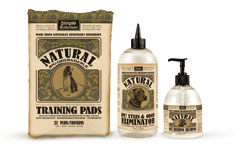 Earth conscious consumers now have an eco-friendly
choice in pet care. The Natural line of products by Simple Solution
is completely, 100% all-natural. Simple Solution Natural is based
on a way of life! Find Simple Solution at Petco, PetSmart or
your local pet retailer.
Earth conscious consumers now have an eco-friendly
choice in pet care. The Natural line of products by Simple Solution
is completely, 100% all-natural. Simple Solution Natural is based
on a way of life! Find Simple Solution at Petco, PetSmart or
your local pet retailer. 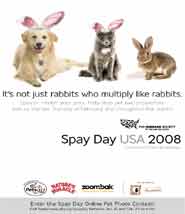 What: The Humane Society
of the United States' annual campaign to inspire people to save
animal lives by spaying or neutering pets and feral cats.
What: The Humane Society
of the United States' annual campaign to inspire people to save
animal lives by spaying or neutering pets and feral cats. Fido
Friendly magazine lists accommodations where you can stay with
your dog while traveling in the United States and Canada. Each
quarter, our editorial includes hotel, city and state reviews.
Fido
Friendly magazine lists accommodations where you can stay with
your dog while traveling in the United States and Canada. Each
quarter, our editorial includes hotel, city and state reviews.
 Did
you know that Urine Off is the #1 Vet recommended Urine Odor
and Stain Remover. In fact, for the last 3 years THOUSANDS of
Vets nationwide have recommended Urine Off to their clients,
solving their #1 Household problem, unsightly urine odors and
stains. Urine Off's professional strength formula is designed
to remove odors and stains even old ones, by getting down
to the source of the problem and removing it permanently. Endorsed
by many of the leading animal organizations, and sworn on by
our thousands of loyal customers, who after using it always say
the same thing: "Thanks Urine Off, finally something that
works."
Did
you know that Urine Off is the #1 Vet recommended Urine Odor
and Stain Remover. In fact, for the last 3 years THOUSANDS of
Vets nationwide have recommended Urine Off to their clients,
solving their #1 Household problem, unsightly urine odors and
stains. Urine Off's professional strength formula is designed
to remove odors and stains even old ones, by getting down
to the source of the problem and removing it permanently. Endorsed
by many of the leading animal organizations, and sworn on by
our thousands of loyal customers, who after using it always say
the same thing: "Thanks Urine Off, finally something that
works."  Having trouble sleeping? Over 25,000
doctors, chiropractor and sleep clinics worldwide recommend the
biggest breakthrough in better sleep -- the Tempur-Pedic Swedish
Mattress. Call now for your FREE MATRESS SAMPLE. 1-877-215-9200
Having trouble sleeping? Over 25,000
doctors, chiropractor and sleep clinics worldwide recommend the
biggest breakthrough in better sleep -- the Tempur-Pedic Swedish
Mattress. Call now for your FREE MATRESS SAMPLE. 1-877-215-9200